News
Island wines: the present and future in your glass
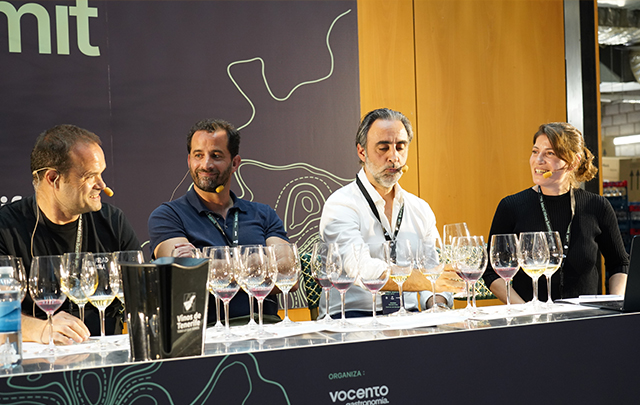
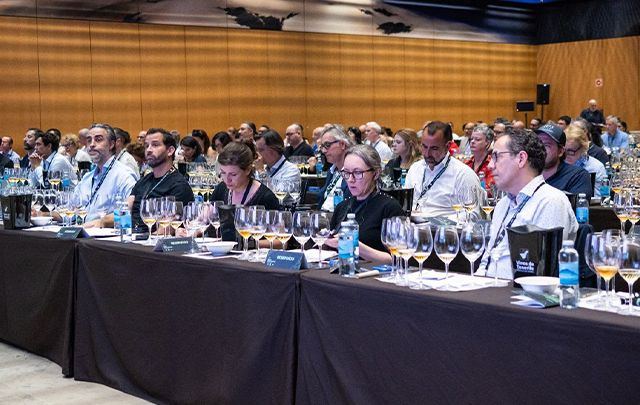
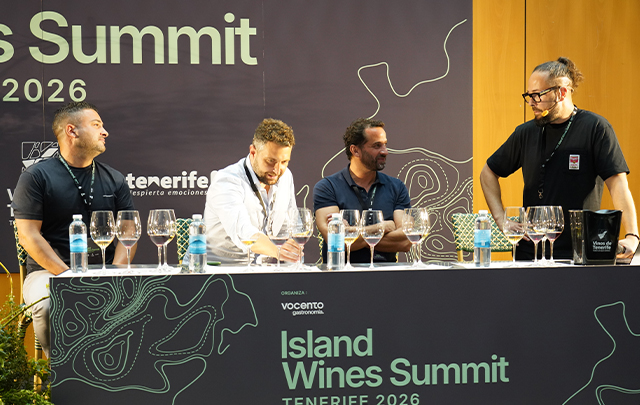
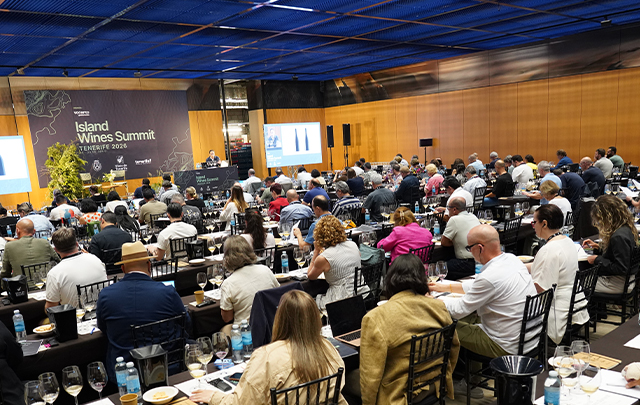
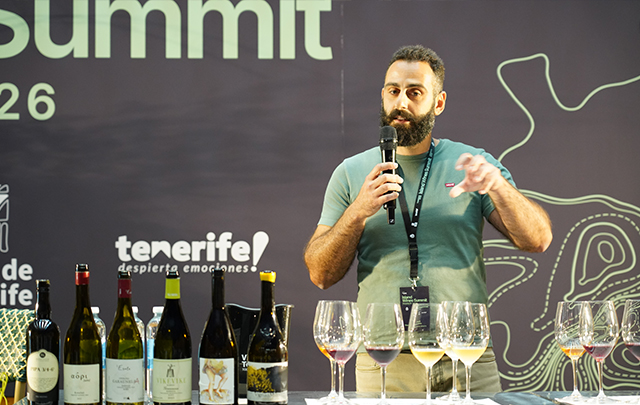
At a wine tasting held in Tenerife, the Argentine sommelier Paz Levinson – who now heads the sommelier team at the Anne-Sophie Pic group in France – moderated a session with three key producers from Macaronesia: Jonatan García Lima (Suertes del Marqués, Tenerife), Roberto Santana (Envínate, Tenerife) and António Maçanita (Azores Wine Company, Azores). Levinson spoke of the difficulty of introducing foreign wines to the French market, where wine lists are still dominated by local wines, and how wines from the islands – accounting for 30 per cent of the selection on some of these lists – have become a gateway for Spain and Portugal into haute cuisine restaurants. The speakers agreed that the appeal of these wines does not lie in aggressive marketing, but in an authenticity rooted in traditional viticulture, ungrafted vines, rain-fed cultivation and extreme volcanic soils.
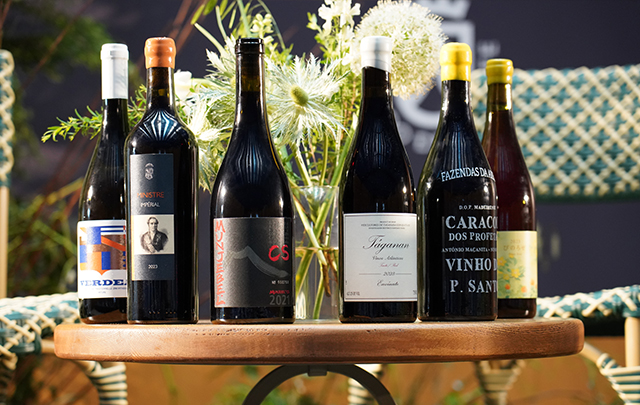
White wines from Tenerife made from Listán Blanco grapes were tasted, sourced from La Orotava and Los Realejos, where the braided trellis system and century-old vines produce wines of great tension, low alcohol content and a strong expression of terroir. García Lima highlighted the valley’s historical potential – once focused on bulk wine production – and how today those old volcanic vines are yielding some of Spain’s finest white wines. From the Azores, Maçanita presented a wine made from the Arinto dos Açores variety, sourced from vineyards almost at sea level on the island of Pico, planted amongst rocks and battered by the salt spray, where the combination of young volcanic soils and proximity to the ocean results in a distinct minerality and unusual depth.
In the realm of reds, Santana highlighted the role of Listán Prieto in Tenerife and its kinship with American varieties such as País and Criolla Chica, championing it as a grape with a promising future due to its heat resistance, moderate alcohol content and supple tannins. Levinson linked this work to the rediscovery of Criolla Chica in Argentina and País in Chile, highlighting the transatlantic dimension of these historic grape varieties. Maçanita, for his part, championed Madeira’s Tinta Negra, the most widespread variety on the island but traditionally overlooked, demonstrating that, with reduced yields and precise winemaking, it can produce refined, smoky and long-lived reds. Jonatan García brought the red wine session to a close with a Listán Negro from the La Suerte plot (formerly El Ciruelo), a high-altitude vineyard in La Orotava whose austere style—with firm tannins and a profile reminiscent of Nebbiolo—reinforces the idea that the Canary Islands’ local varieties can produce age-worthy wines of international calibre.
As a recurring theme, Paz Levinson emphasised the role of on-site education, the need to inspire teams and customers with wines that express heritage and terroir, and how these small-scale island productions, despite their limited volume, can change the global perception of entire countries by offering a different image of Spain and Portugal.
Related news
News
The Island Wines Summit in Tenerife is fostering a global community with a promising future for island wines
News
Volcanoes, the sea, and century-old vineyards: an in-depth look at Tenerife’s wines
News
Island wine establishes itself as a global category at the Island Wines Summit
News
Miguel Ángel Millán, Guardian of Tenerife Wines 2026
News
Island status as a refuge for the Atlantic wine-growing heritage
News
Four Islands in Five Sweet Wines
News
The minerality of wine as a neurosensory experience
News
The Mediterranean in a Glass: identity, volcanoes and islands in a thrilling tasting experience
News
Island wines according to Pascaline Lepeltier: from a fragmented reality to a global category
News