News
Island status as a refuge for the Atlantic wine-growing heritage
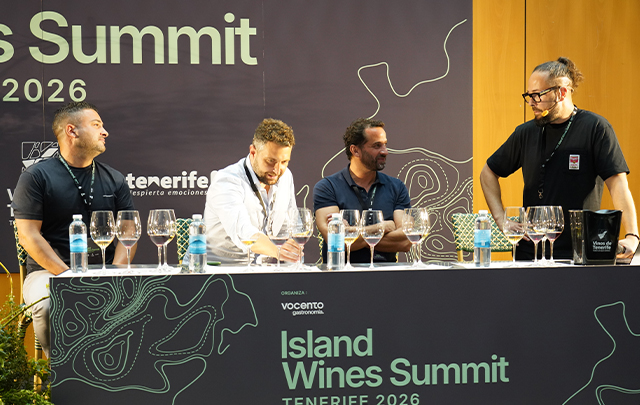
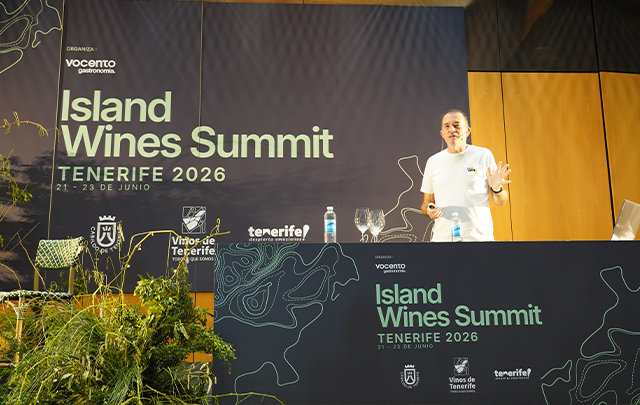
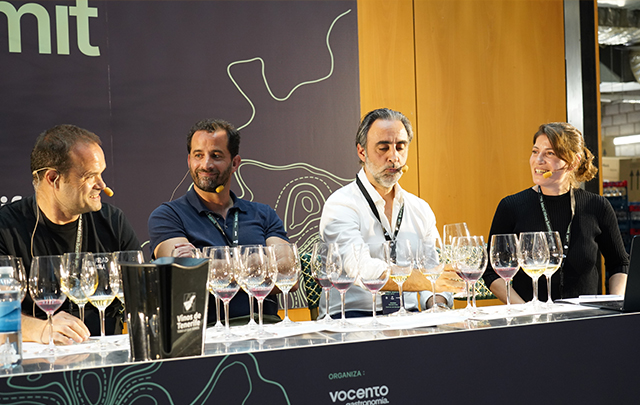
Island life as a refuge for the Atlantic wine heritage In a lively round-table discussion, Fernando Mora MW opened the talk by championing agriculture as the foundation of the islands’ cultural identity, drawing a powerful analogy between ‘real tomatoes’ and regional wines: imperfect, diverse and unique products, possible only if there is life in the villages and farmers who can make a living from their work. Speaking from Tenerife, he highlighted the ‘Papa bonita’ potato and the braided trellis system of the Orotava Valley as symbols of intelligent mixed farming and the optimal use of land, in contrast to industrial agriculture which homogenises flavours and ravages the landscape and culture.
Mora denounced the impact of herbicides, insecticides and mass mechanisation — machine harvesting, systematic pre-pruning — on the loss of old vineyards and traditional know-how, pointing out how many century-old vines are abandoned not through neglect, but due to a sheer lack of profitability. He also highlighted the role of viticulture as a living firebreak against wildfires, and championed the bottle of wine as the most powerful form of ‘wine tourism’: a piece of land and a vintage travelling the world.
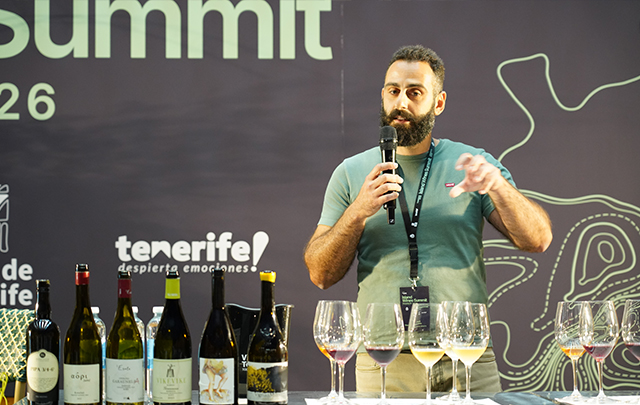
From the Azores, António Maçanita recounted the epic recovery of the vineyards of Pico, a landscape of stone walls declared a World Heritage Site not only for its beauty, but also for the resilience of its people. He explained how, following the phylloxera epidemic and the exodus, the islands were frozen in a “time capsule”, and how the desire to “return to the land” has today driven a genuine silent revolution: from 89 nearly extinct vines to 34 hectares of a native variety, collective projects, free consultancy and a value chain that has raised the price of grapes from 0.70 to almost 7 euros.
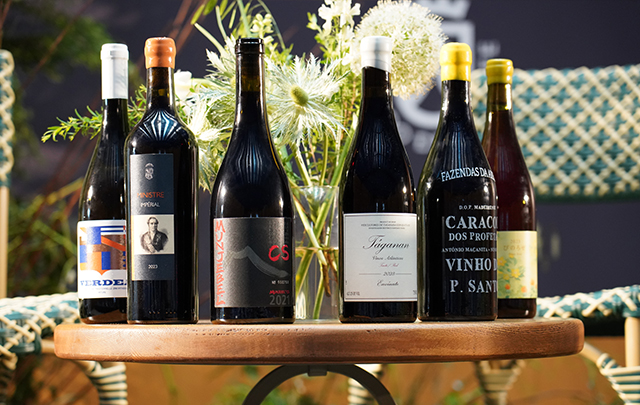
Maçanita highlighted the social dimension of this revival: the emergence of young winegrowers who have gone from being employees to setting up their own projects, with wines of strong character already featuring on international wine lists. At the same time, he warned of the fragility of the model: five consecutive vintages of very low yields, with outputs below 500 kilos per hectare, show that nothing is guaranteed despite the progress made. In the glass, he presented a variety derived from Verdelho and Bastardo, characterised by pronounced minerality, high acidity and salinity, produced using direct pressing, pre-oxidation of the must and ageing on lees without sulphites until the end of fermentation.
Rodrigo González, a sommelier from Tenerife, offered the perspective of the service industry and the market, recalling how, from afar, he had proudly witnessed the reappearance of Canarian wines on the international stage. He analysed the evolution of two red wines from Tenerife’s volcanic soils, highlighting how, over time, they lose fruit and become more ‘skeletal’ on the palate, united by the same dry extract and a subtle bitterness that links them to great wines from other parts of the world. In one of them, the 2017 vintage from the same plot displayed an energy that was still taut, with notes of tomato leaf and an elegant vegetal profile, in a wine that, against all initial expectations, continues to develop in the bottle.
González placed this tasting within a broader historical context: from a mid-19th-century wine list in New York, where Atlantic wines were limited to categories such as Madeira, the Canary Islands or Jerez, to the current reality, with Tenerife wines featured in global icons such as Noble Rot or achieving perfect scores in the most influential guides. For expatriate professionals, he argued, these milestones have meant being able to ‘hold their heads high’ and demonstrate that island wines can go head-to-head with the great traditional regions.
Winemaker Borja Pérez, a fourth-generation winegrower from La Guancha, brought the discussion down to the intimate scale of a family-run winery that has had to unlearn decades of poor practices. He recounted how, since 2011, contact with leading winemakers on the mainland had enabled him to completely rethink his approach to winemaking, and how the 2013 vintage of a Marmajuelo white fermented in new 500-litre barrels — a decision he had at the time considered almost a mistake forced by financial constraints — has now proved key to the wine’s longevity.
Pérez emphasised that fermentation with very cloudy must, without temperature control or additives, and a reliance on the quality of the grapes and the passage of time, have enabled this wine—which was once difficult to sell and reached the market past its prime—to now demonstrate a surprising capacity for ageing after 12 years.
He chose this bottle as an example of a long-pursued goal: to demonstrate that the Canary Islands can offer wines with a history in the bottle, despite the youth of their ‘modern era’ and the dramatic loss of around 60 per cent of the archipelago’s vineyards in just 12 to 15 years. In the closing stages, the speakers agreed that the islands’ greatest challenge lies in revitalising the countryside so that new generations will want to stay and make a living from viticulture. This means, they asserted, moving away from quick and obvious wines, accepting poorer short-term figures and relying on time as their main ally: time spent on the vine, in ageing and in building collective memory. Amid references to the possibility—albeit still remote—of seeing wine cellars brimming with old vintages of island wines, a future was sketched out in which isolation, territory, identity and longevity would cease to be weaknesses and instead become the great Atlantic strength.
The session concluded with a call to recognise the value of the vineyards of the Azores and the Canary Islands as some of the last refuges of authentic agricultural expression. Whilst the islands have preserved a unique diversity and wine-growing landscapes for centuries thanks to their isolation, they concluded, ensuring their survival requires urgent awareness: without farmers, there are no vineyards; without vineyards, there is no wine; and without local wine, the islands risk losing an essential part of their memory and their voice in the world.
Related news
News
The Island Wines Summit in Tenerife is fostering a global community with a promising future for island wines
News
Volcanoes, the sea, and century-old vineyards: an in-depth look at Tenerife’s wines
News
Island wine establishes itself as a global category at the Island Wines Summit
News
Miguel Ángel Millán, Guardian of Tenerife Wines 2026
News
Four Islands in Five Sweet Wines
News
The minerality of wine as a neurosensory experience
News
Island wines: the present and future in your glass
News
The Mediterranean in a Glass: identity, volcanoes and islands in a thrilling tasting experience
News
Island wines according to Pascaline Lepeltier: from a fragmented reality to a global category
News